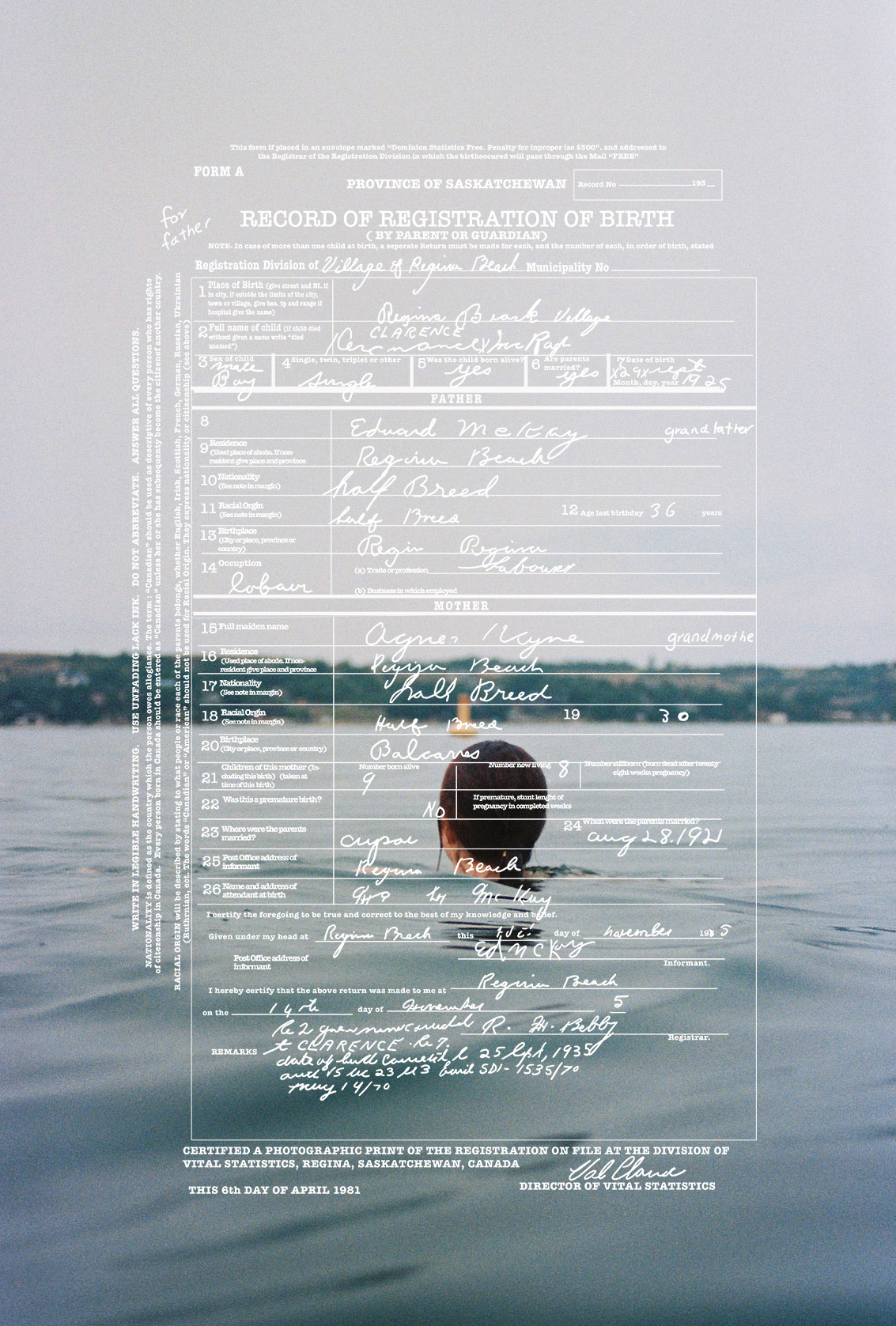
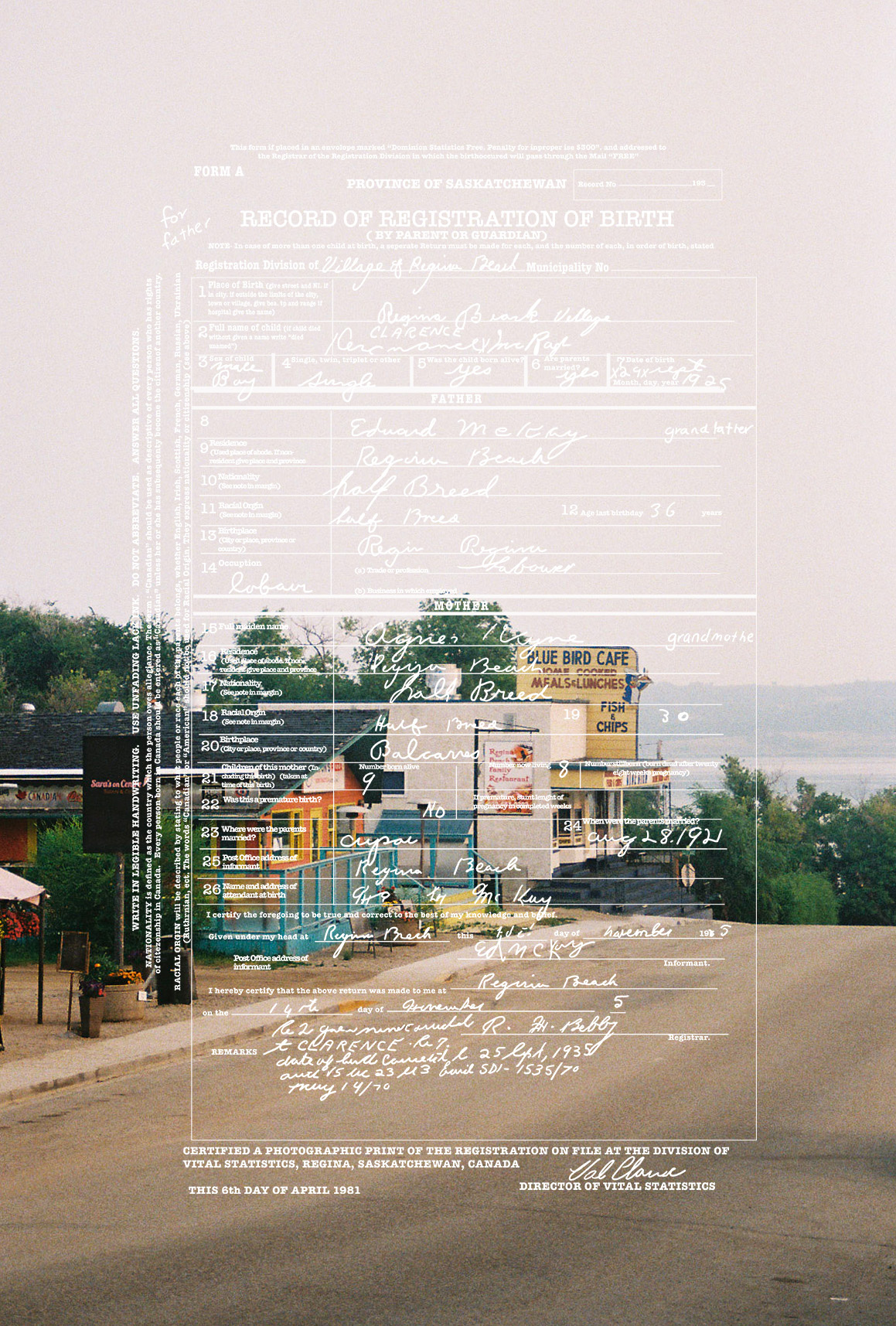
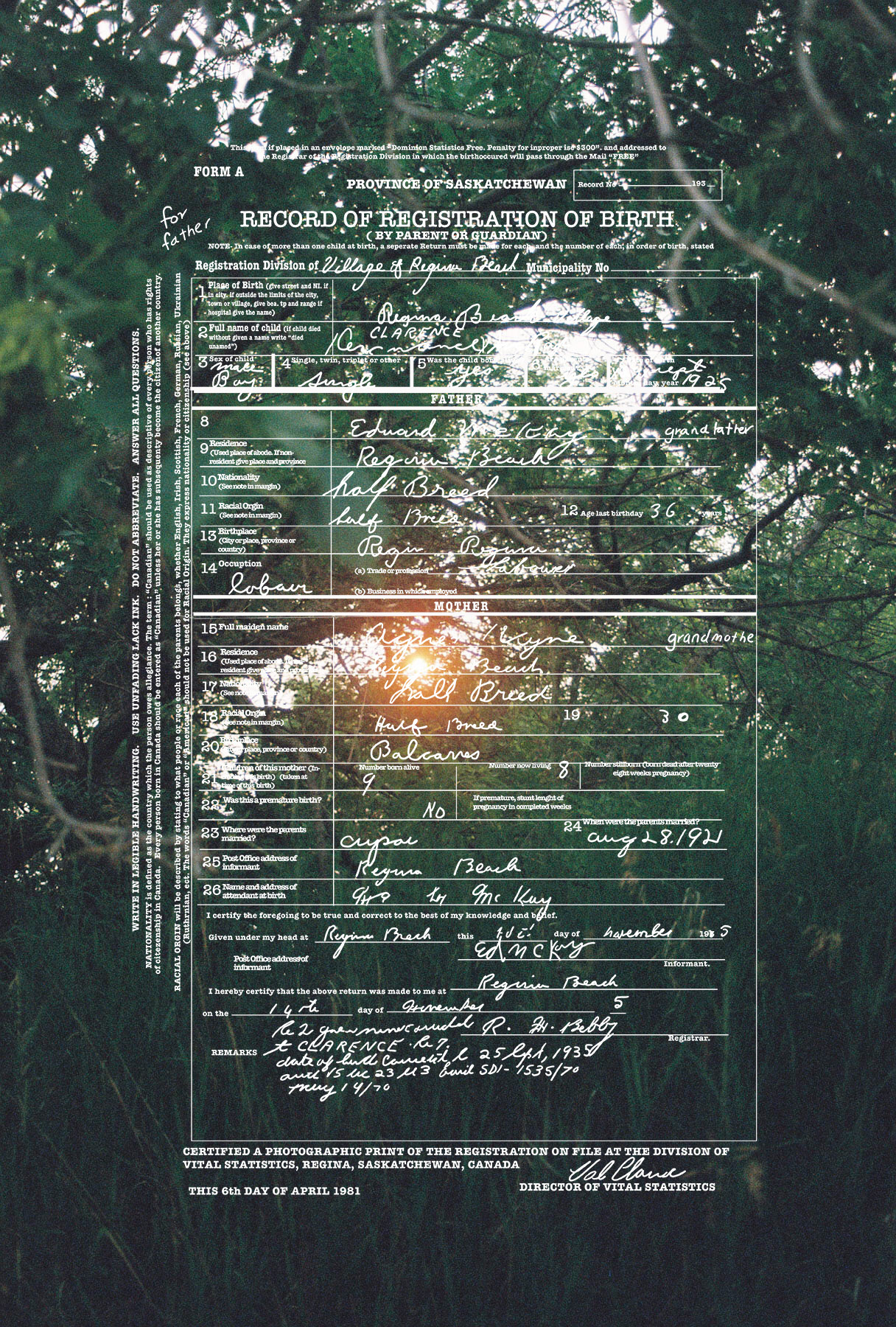
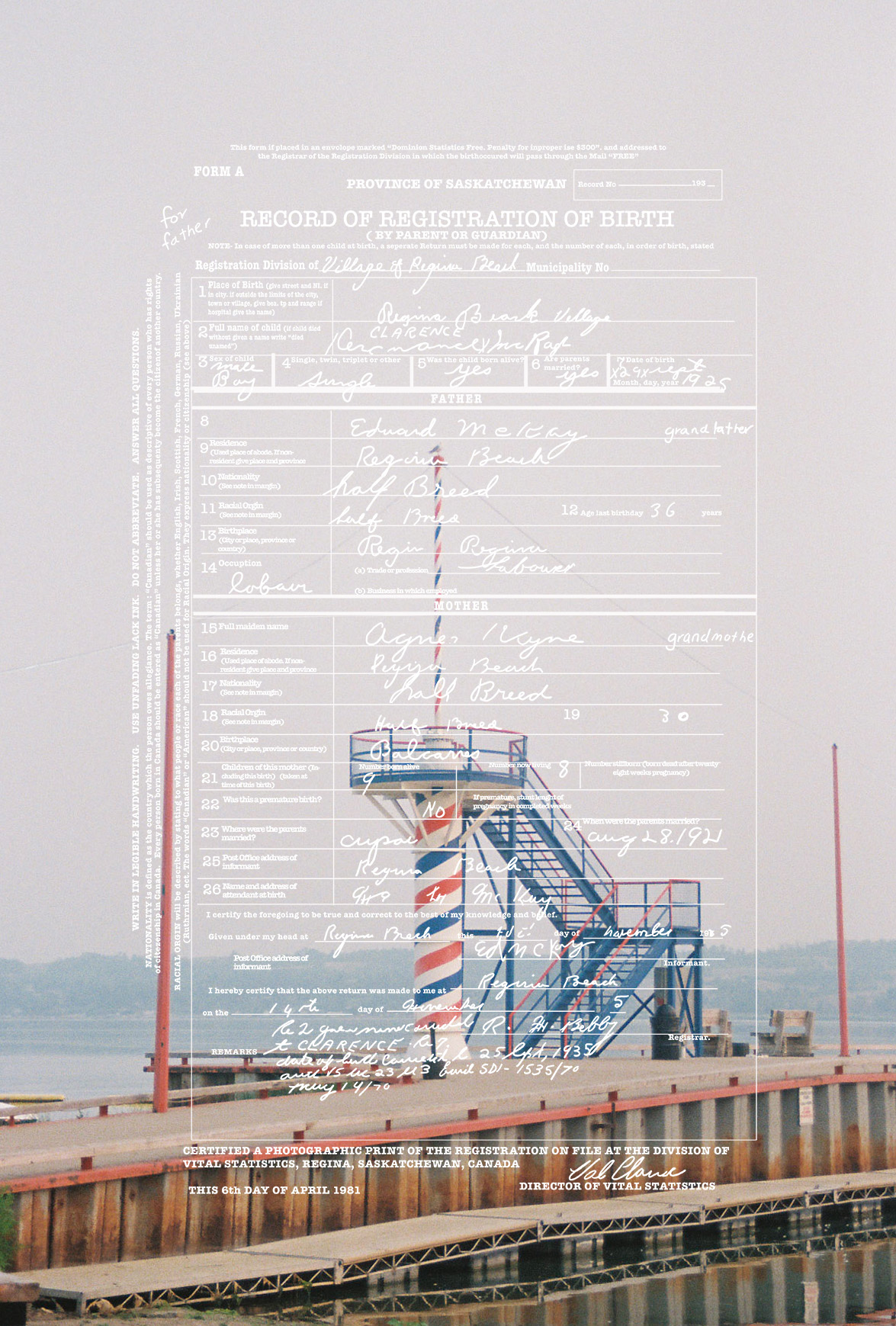
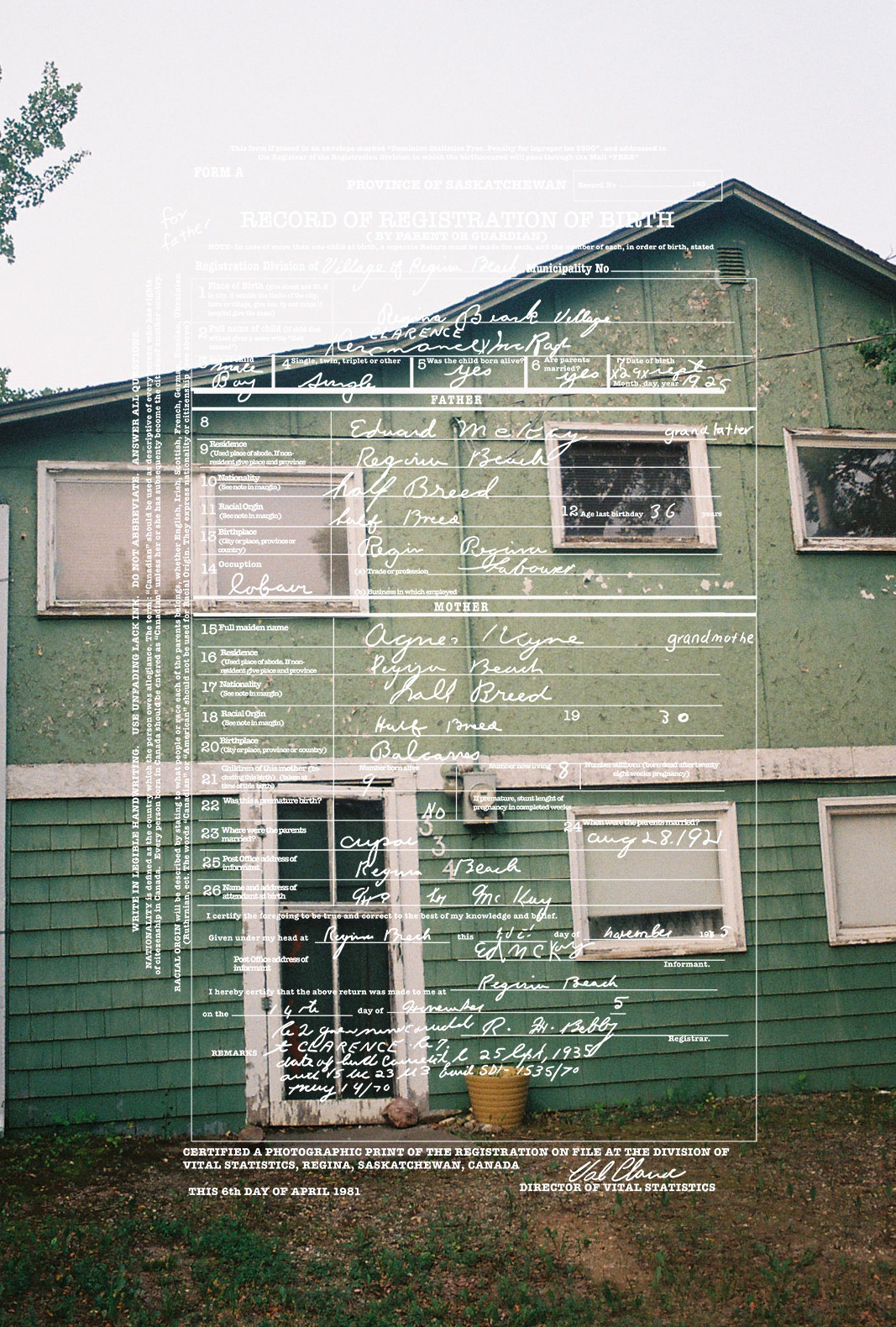
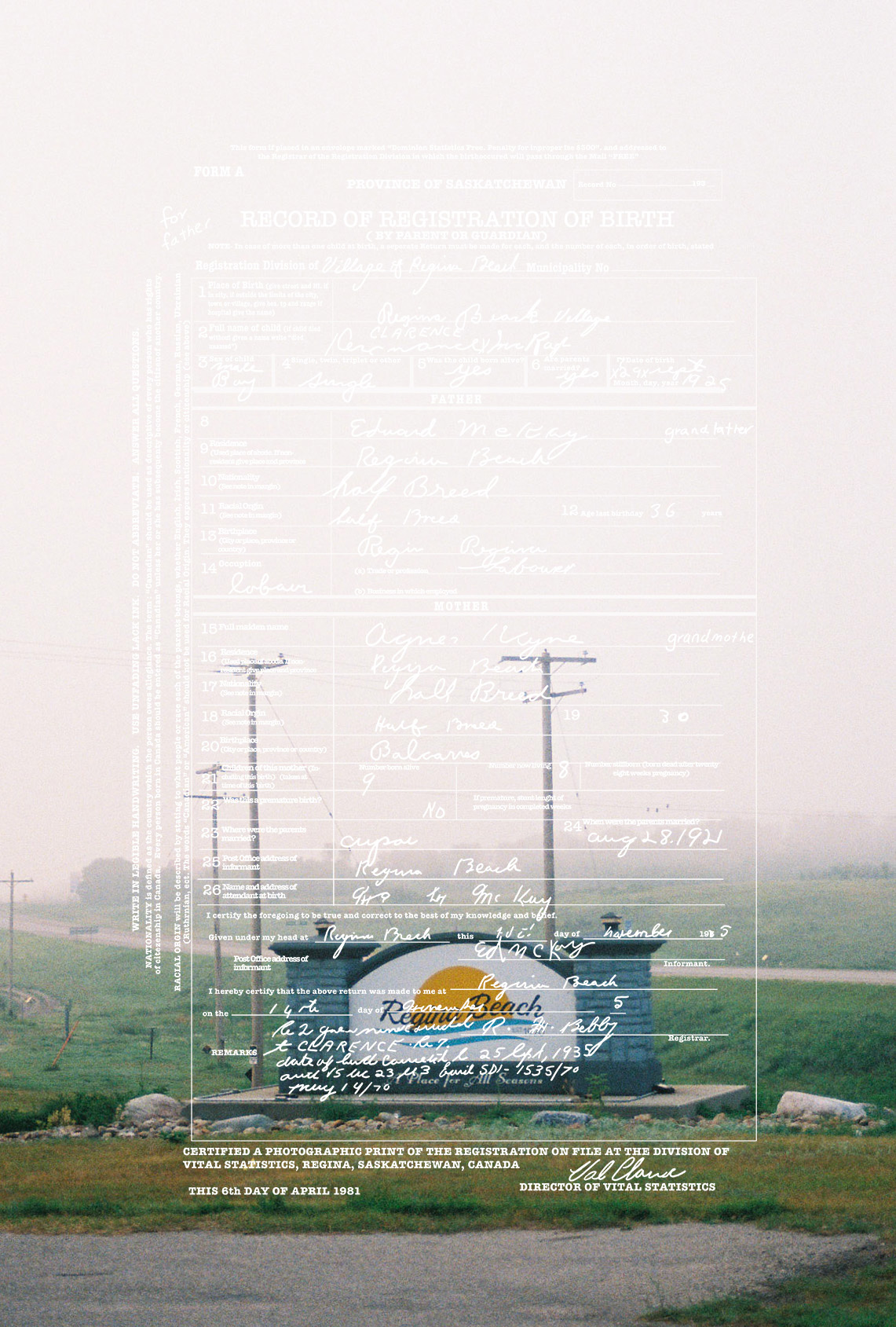
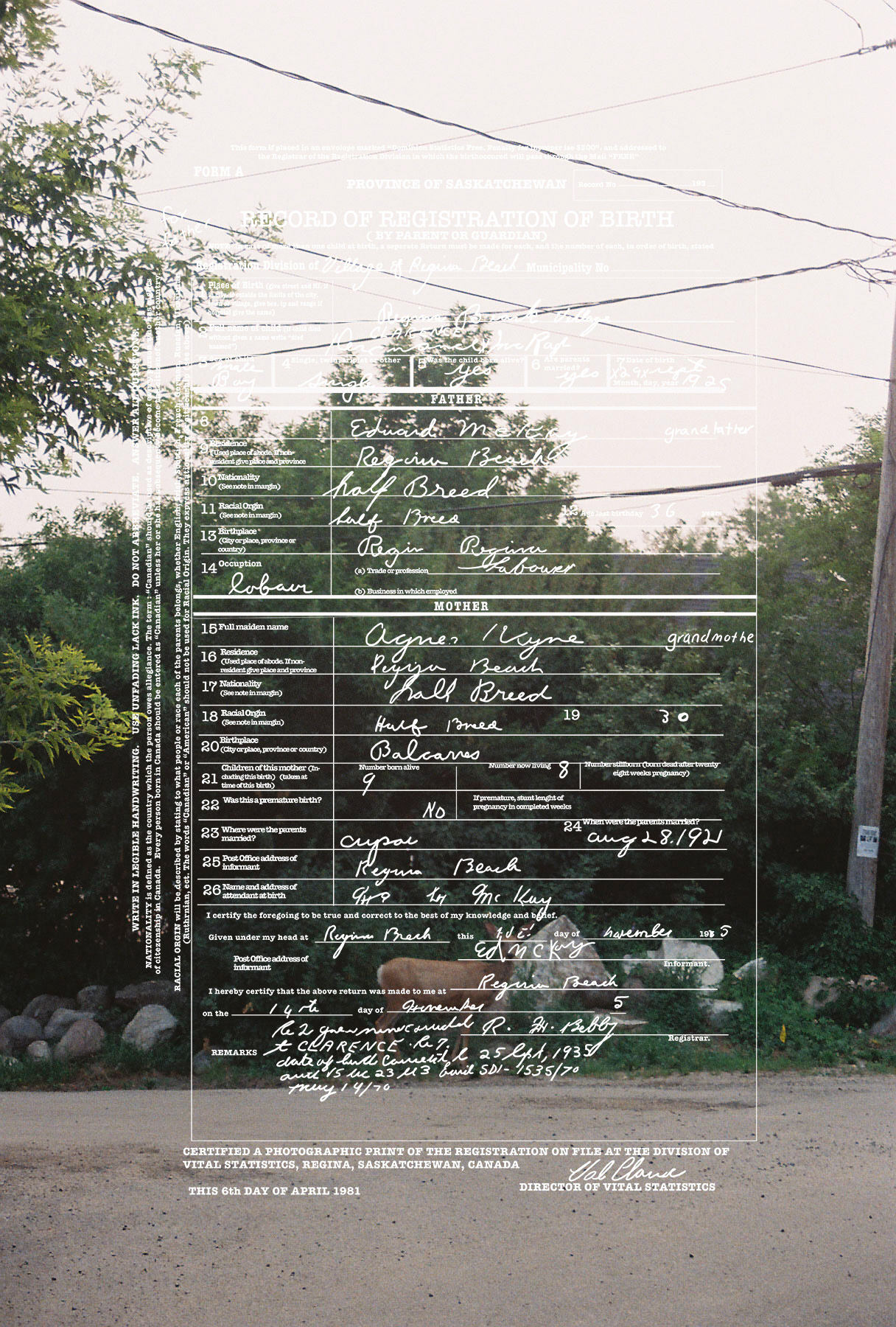
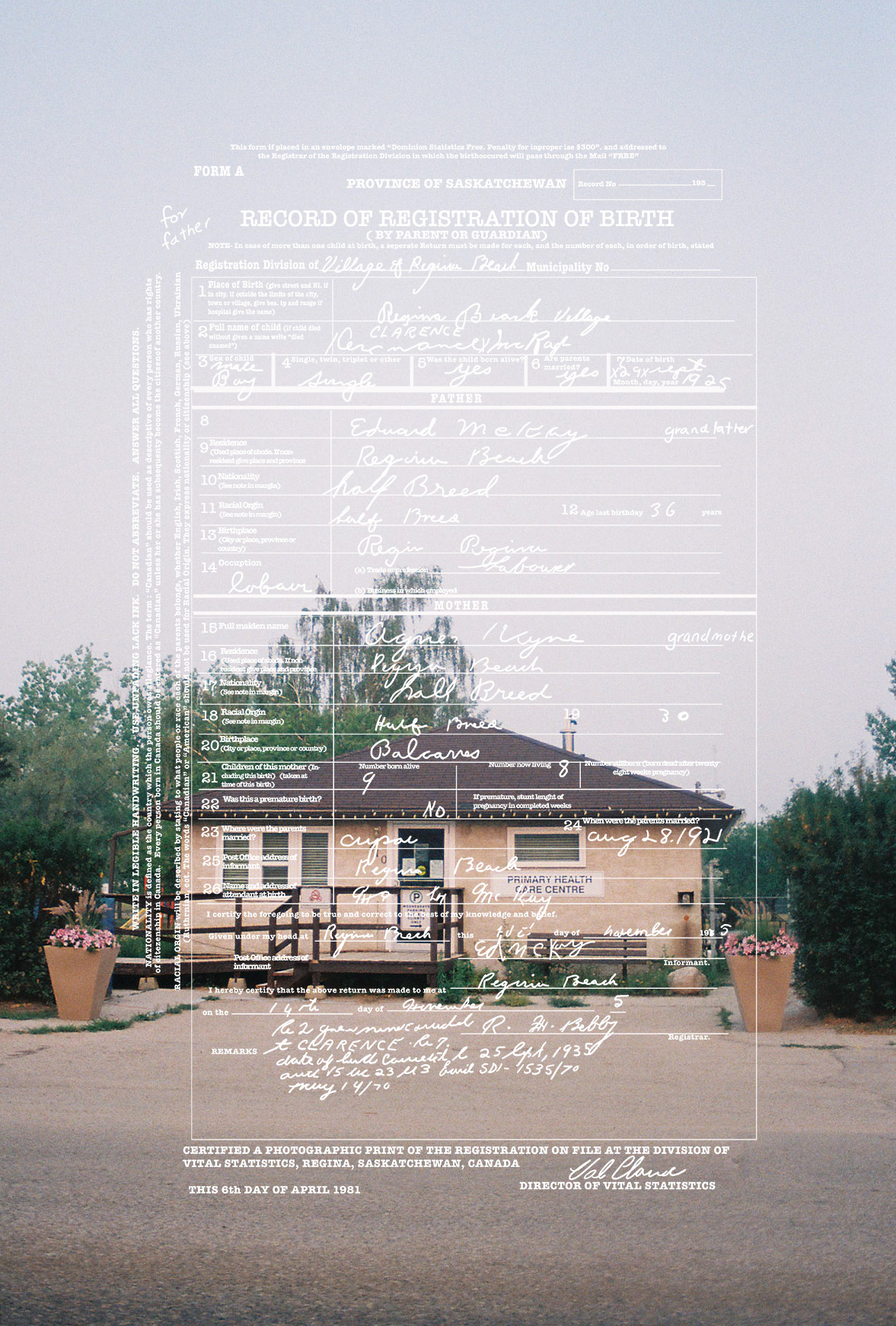
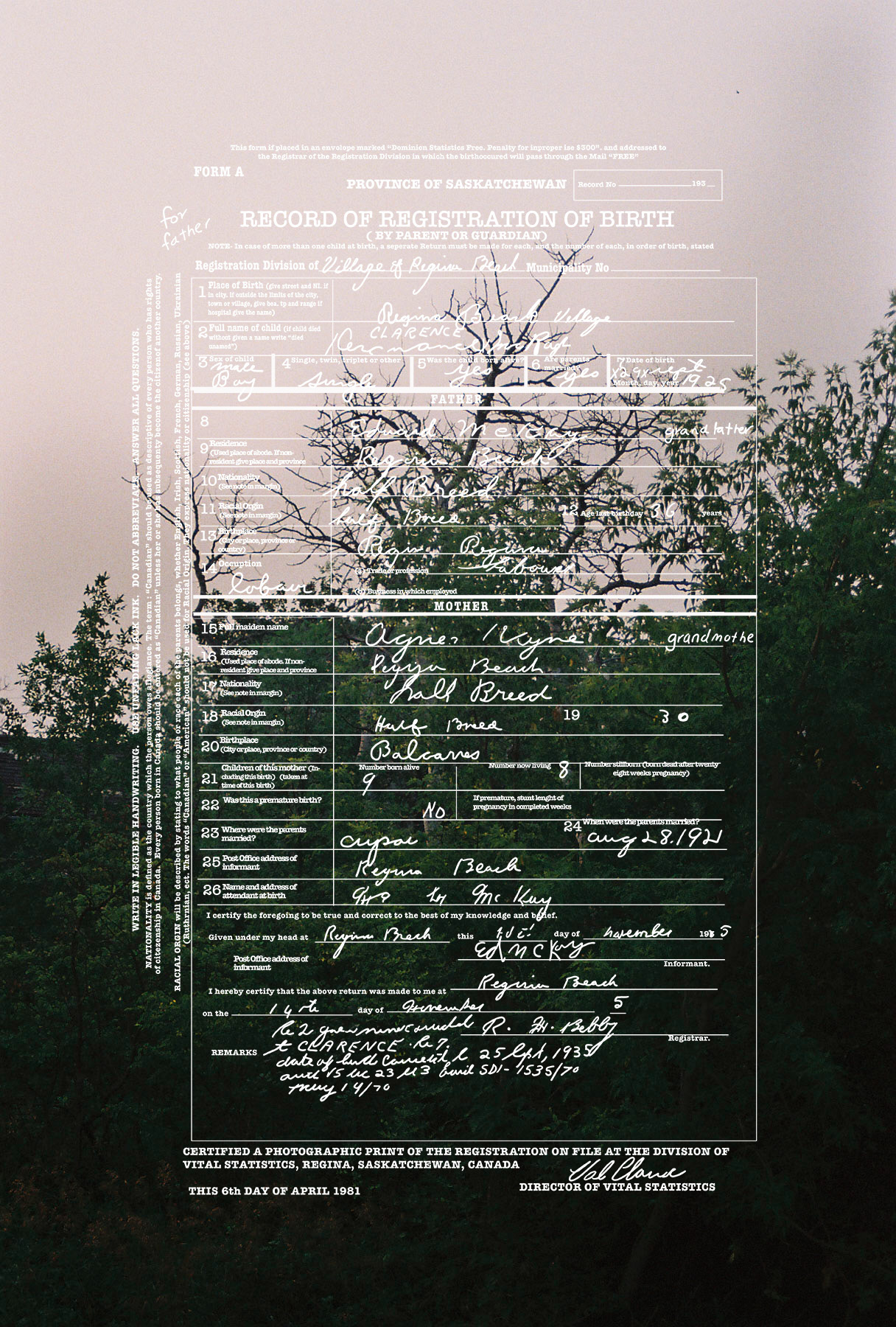
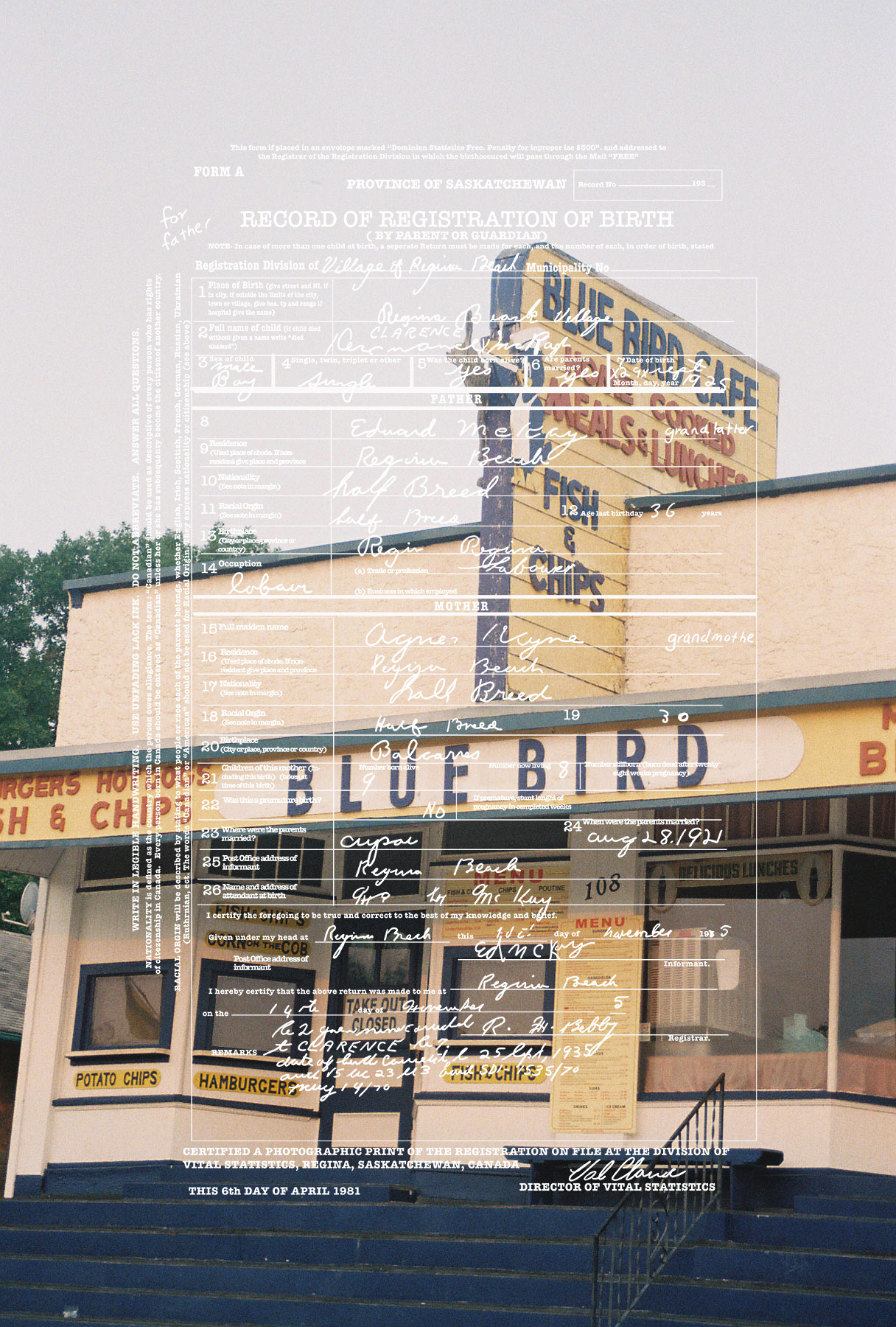
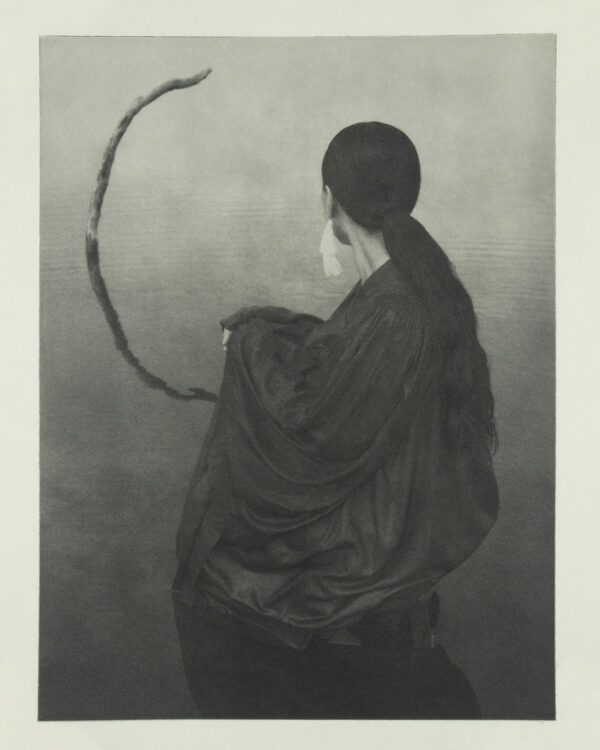
A series tracing family history and confronting the bureaucratic labeling of Indigenous identities in Canadian history by Métis artist Nahanni McKay. Based on Treaty 7 Territory, in Mînî Hrpa (Banff) and Mohkínstsis (Calgary), Nahanni is a member of Otipemisiwak (Métis Nation of Alberta), which deeply inspires her work. She produces sculptures, images, and beadwork that takes the shape of spirits around her hometown. Her artwork reflects her interests in the human impact of the natural environment, the beauty of her hometown, and how the mountains attract a colonial desire, often turning nature into a commodity. “Halfbreed” was created in response to the anxiety surrounding Indigenious identity, beginning when Nahanni encountered the term “pretendian”. The project reflects Nahanni’s personal questioning around how Indigenous identity is validated, challenged, or denied both publicly and privately.
“I always knew I was Métis. I grew up with my dad making bannock, teaching us to paddle and even having my first buckskin coat made for me the second I was born. It wasn’t until during an artist residency at the Banff Centre, I researched my family history and traced my Métis ancestry to the Red River Settlement in Manitoba. Archival documents revealed that my great-grandparents were recorded using the colonial term ‘halfbreed’. For this work, I retrace my grandfather’s birth certificate, emphasizing the discriminatory language and digitally tracing it onto my photographs of Regina Beach, Saskatchewan where my family is from. This brings together an archive, a landscape, and my family history to confront the bureaucratic labeling of Indigenous identity. When applying for a gallery there is always a check box where it usually says in some sort of manner “are you Indigenous?” But if you just look at the work it tells you what I am… I’m a Halfbreed.”