Submission Drawing

anti-epicas

■ About the Work

“Painting is dead, but images can never die.”

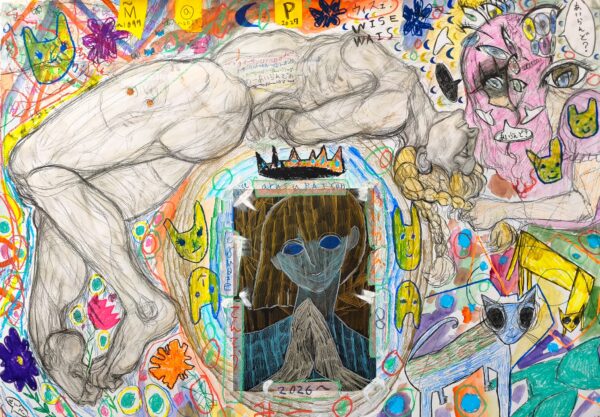
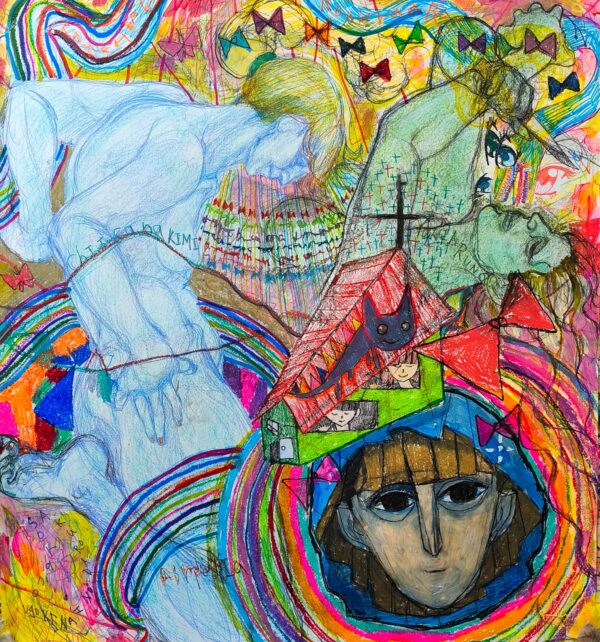
Starting from this proposition, Naohiko Kuriyaki traces a path back to pre-painterly methods that were once universal before the Renaissance—icons, Yamato-e, and cave paintings. By layering crayon, colored pencil, marker, and tempera, he entangles drawing and writing within the pictorial field, summoning the act of kaku—to draw and to write—prior to the institutionalization of painting onto large sheets of paper.

Centered on the theme of “inner movement,” multiple gestures and script-like lines intersect across the entire surface. This work most directly manifests Kuriyaki’s artistic inquiry into the simultaneous acts of drawing and writing, where bodily marks and traces of inscription become inseparably intertwined.


Learn more here

anti-epicas

■ About the Work

“Painting is dead, but images can never die.”

Starting from this proposition, Naohiko Kuriyaki traces a path back to pre-painterly methods that were once universal before the Renaissance—icons, Yamato-e, and cave paintings. By layering crayon, colored pencil, marker, and tempera, he entangles drawing and writing within the pictorial field, summoning the act of kaku—to draw and to write—prior to the institutionalization of painting onto large sheets of paper.

Centered on the theme of “inner movement,” multiple gestures and script-like lines intersect across the entire surface. This work most directly manifests Kuriyaki’s artistic inquiry into the simultaneous acts of drawing and writing, where bodily marks and traces of inscription become inseparably intertwined.