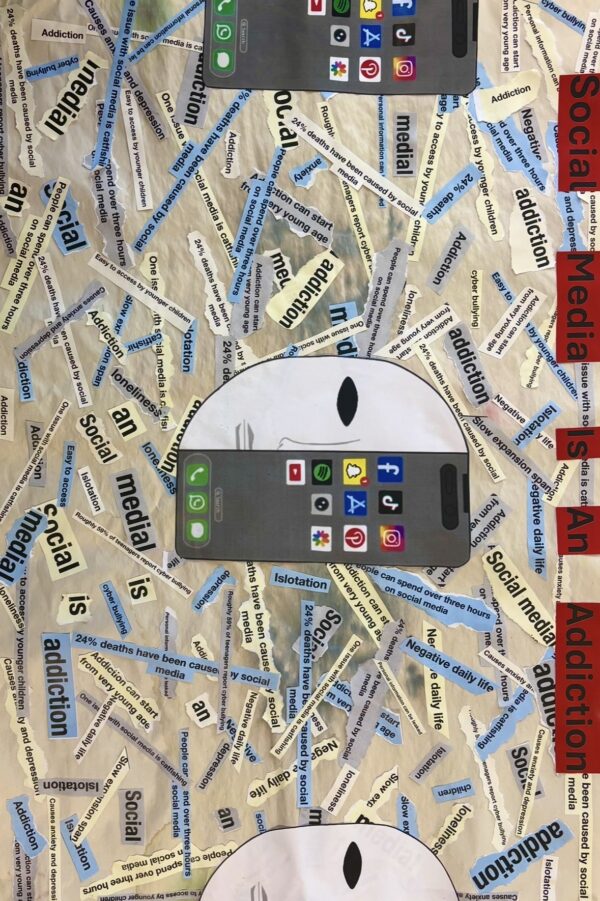
This collage explores how social media connects us yet pulls us apart. Bold red letters state: "Social Media Is An Addiction," using red to signal warning. Torn paper strips repeat words like isolation, anxiety, loneliness and cyberbullying — ragged edges mirror how addiction leaves us feeling fragmented. Statistics reveal 24% of social-media-related deaths, 3+ hours daily use, and 59% of teens facing cyberbullying, showing this is a widespread crisis, not just personal struggle. Smartphones with familiar app icons sit centre-stage, while half-hidden faces behind them suggest our true selves are fading. It captures the paradox: we appear more connected yet feel lonelier. This piece doesn’t reject technology — it simply asks: what do we gain from endless scrolling, and what are we losing?
The Social Media Paradox
21.10.26 — Ella Hunter
This collage explores how social media connects us yet pulls us apart. Bold red letters state: “Social Media Is An Addiction,” using red to signal warning. Torn paper strips repeat words like isolation, anxiety, loneliness and cyberbullying — ragged edges mirror how addiction leaves us feeling fragmented. Statistics reveal 24% of social-media-related deaths, 3+ hours daily use, and 59% of teens facing cyberbullying, showing this is a widespread crisis, not just personal struggle. Smartphones with familiar app icons sit centre-stage, while half-hidden faces behind them suggest our true selves are fading. It captures the paradox: we appear more connected yet feel lonelier. This piece doesn’t reject technology — it simply asks: what do we gain from endless scrolling, and what are we losing?