Submission Drawing

What the Body Leaves Behind

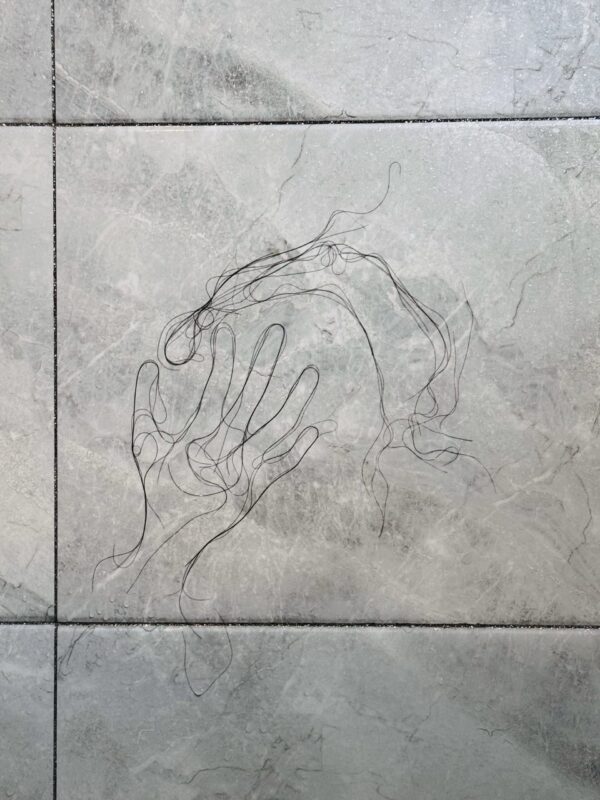
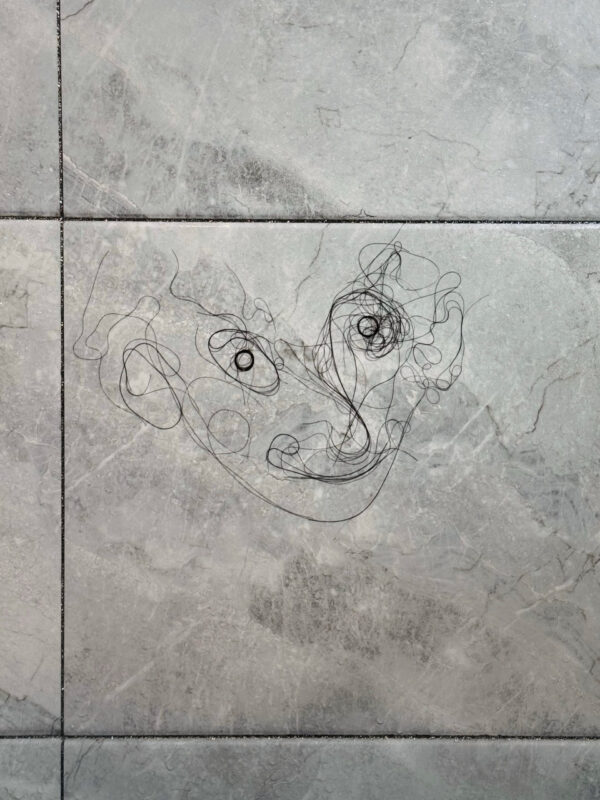
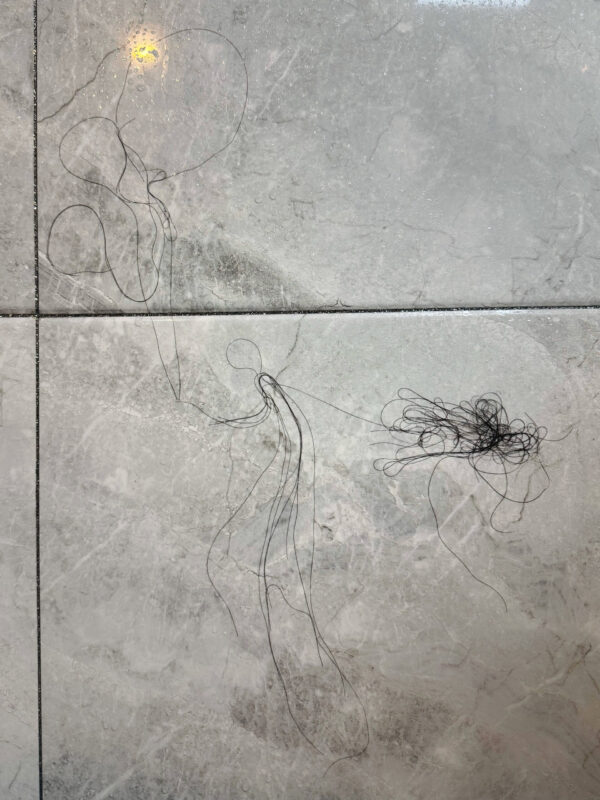
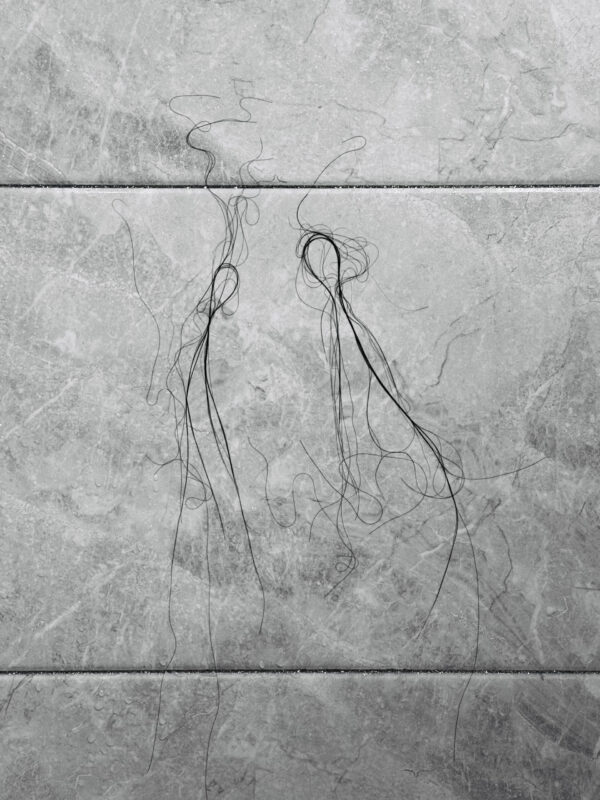
I began making these drawings with strands of hair shed in the shower, arranging a material usually rinsed away into figures, gestures, and small scenes. Hair feels intimate while attached to us, yet strangely foreign once detached—something that was part of the self, but can no longer be fully claimed. By using it as a line, I turn a private trace of the body into an image, asking where the boundaries between self and residue, presence and absence, begin to dissolve. The wet stone tiles become a temporary surface where the strands cling, overlap, and resist control. Each drawing exists only until the floor is cleaned, making disappearance part of the work itself. The photograph preserves not the drawing, but the tension between permanence and erasure: the body leaves something behind, even as it continually sheds and changes.


Learn more here

What the Body Leaves Behind

I began making these drawings with strands of hair shed in the shower, arranging a material usually rinsed away into figures, gestures, and small scenes. Hair feels intimate while attached to us, yet strangely foreign once detached—something that was part of the self, but can no longer be fully claimed. By using it as a line, I turn a private trace of the body into an image, asking where the boundaries between self and residue, presence and absence, begin to dissolve. The wet stone tiles become a temporary surface where the strands cling, overlap, and resist control. Each drawing exists only until the floor is cleaned, making disappearance part of the work itself. The photograph preserves not the drawing, but the tension between permanence and erasure: the body leaves something behind, even as it continually sheds and changes.