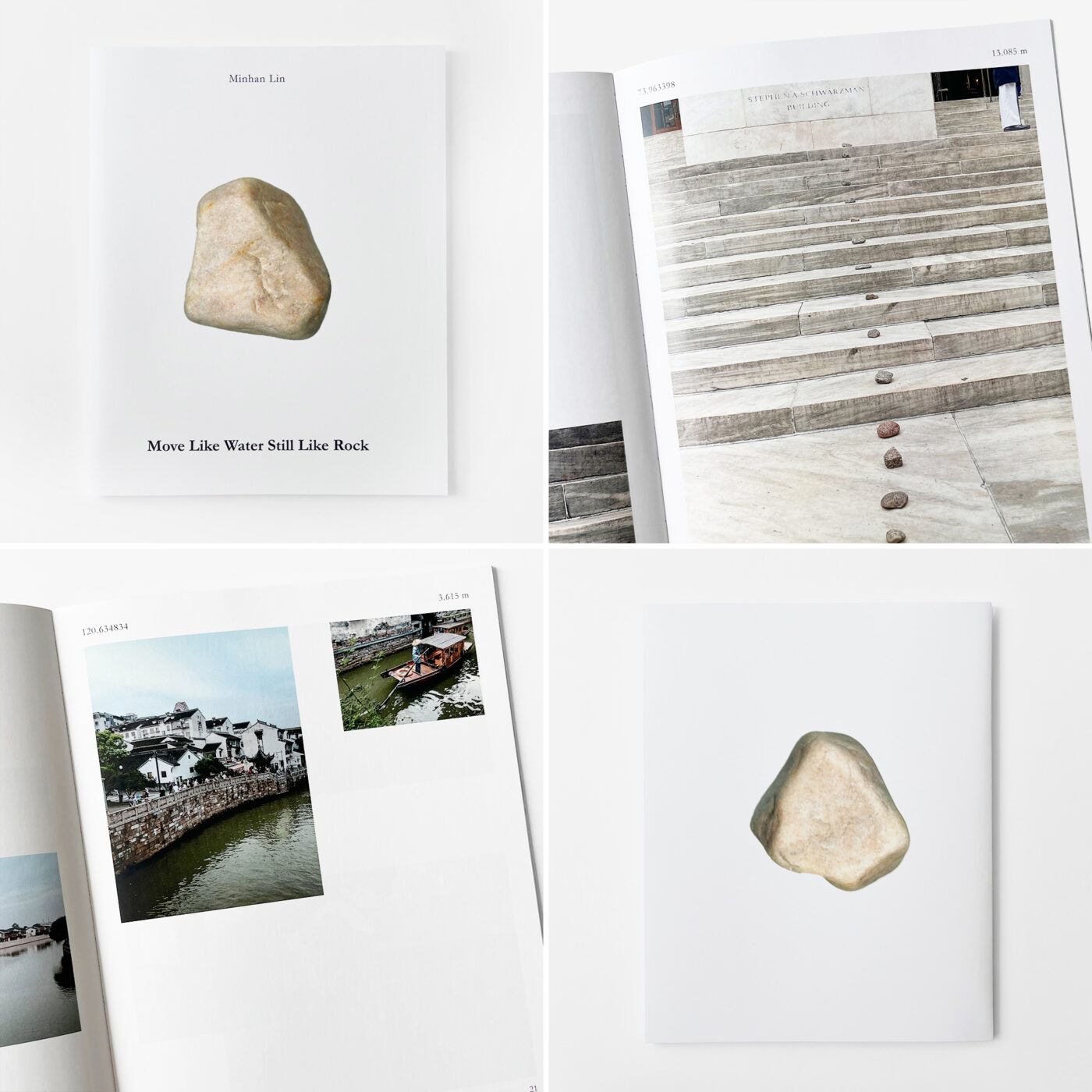
A book about rocks and the forces that form them by architectural designer Minhan Lin. Currently based in New York City, Minhan holds a Bachelor of Architecture from Tongji University and a Master of Science in Advanced Architectural Design from Columbia GSAPP. Minhan’s work explores the intersection of ecological systems and the built environment, specifically how design can support futures of coexistence and cohabitation across all species and forms of being.
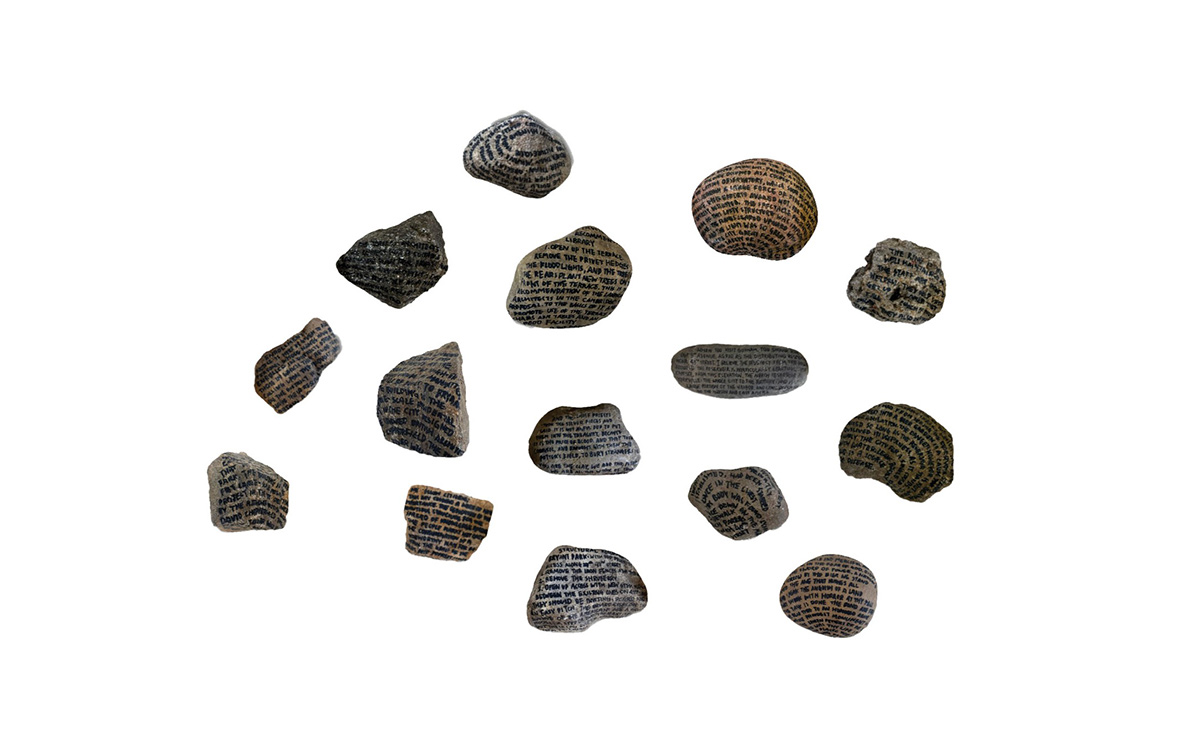
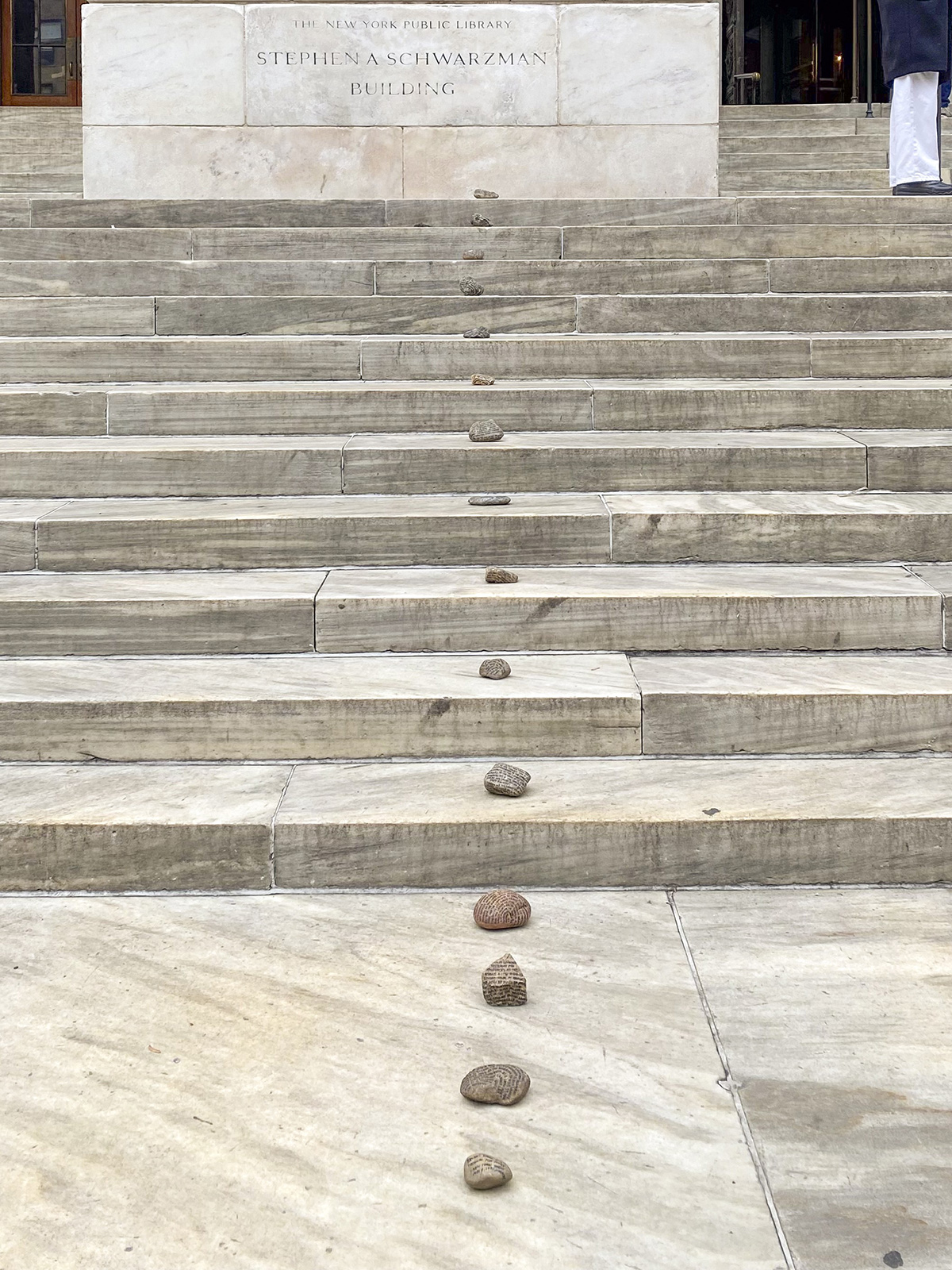
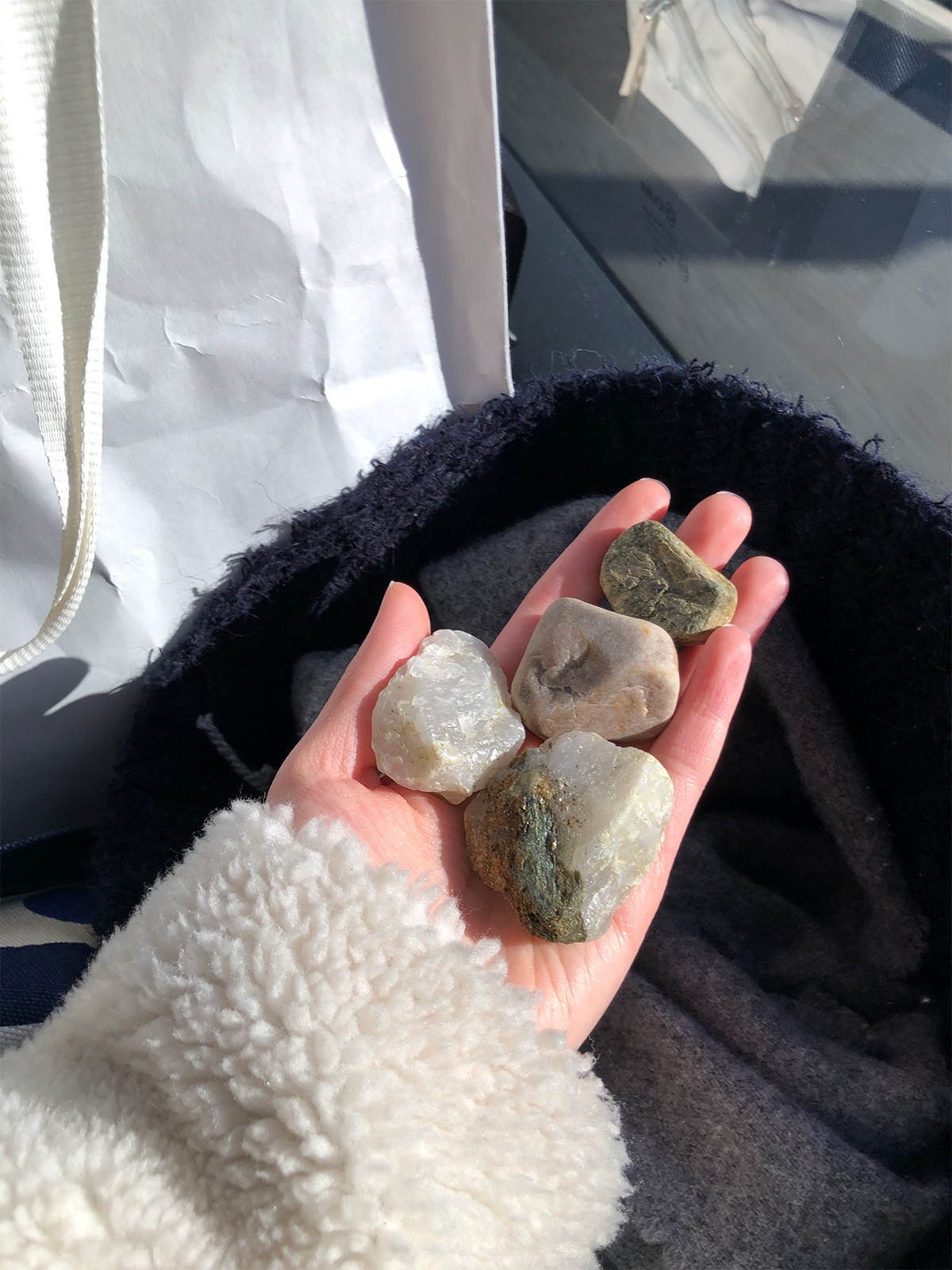
In Move Like Water, Still Like Rock, Minhan approaches rocks as records of movement and transformation. Beneath their apparent stillness lie the forces of water, wind, gravity, and pressure. For Minhan, to observe a rock is to look past its surface and imagine the unseen energies that have shaped it and continue to do so, imperceptibly.
Minhan Lin was selected as one of our 2025 Art & Photo Book Award Winner. With support from Bookmobile, we helped Minhan turn her work into a zine. If you want the opportunity to publish a book of your own work, you can apply for our 2026 Art & Photo Book Awards here. See more from Move Like Water, Still Like Rock as well as our full interview with Minhan below!
What are three life moments that made you who you are today?
1. Living in a room where the balcony was twice the size of the room itself.
2. Watching an unreasonable amount of cartoons growing up.
3. Going to grad school to study architecture and design spaces for the coexistence between the terrapin and the human.
Who or what is inspiring you these days? What’s shaping your thinking?
Recently, it’s been my daily walks in the park. There’s something grounding about moving at a slower pace and noticing small shifts like light changing, leaves moving, things growing or decaying. It reminds me that there’s always more happening than what we immediately see.
Do you feel you are more instinctual or intentional when you create?
Both, but at different stages. The ideas usually come instinctively. I tend to follow a feeling before I can fully explain it, but once I start making or creating, I become much more intentional about how things are communicated. Instinct gets me started, and intention helps me stay clear.
What is it that interests you about rocks and when did they first capture your attention?
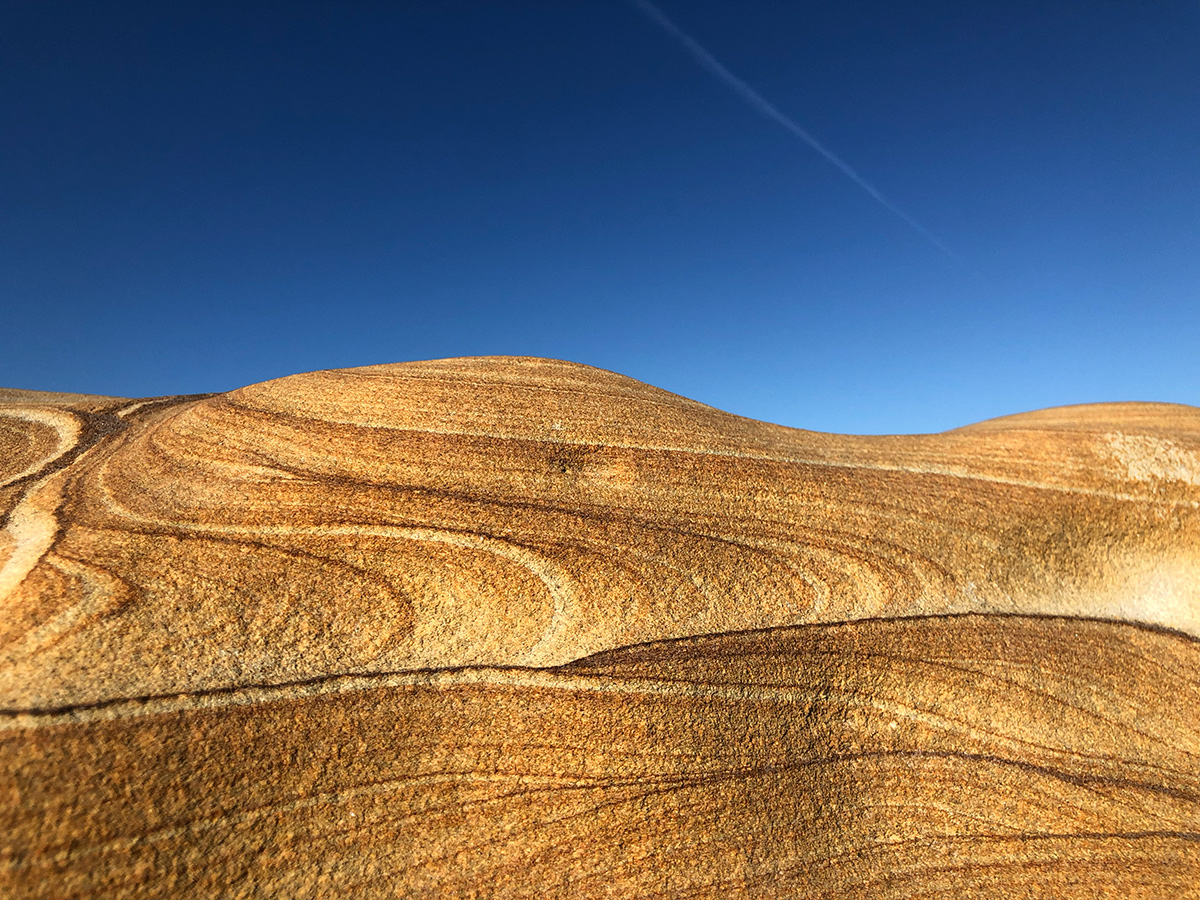
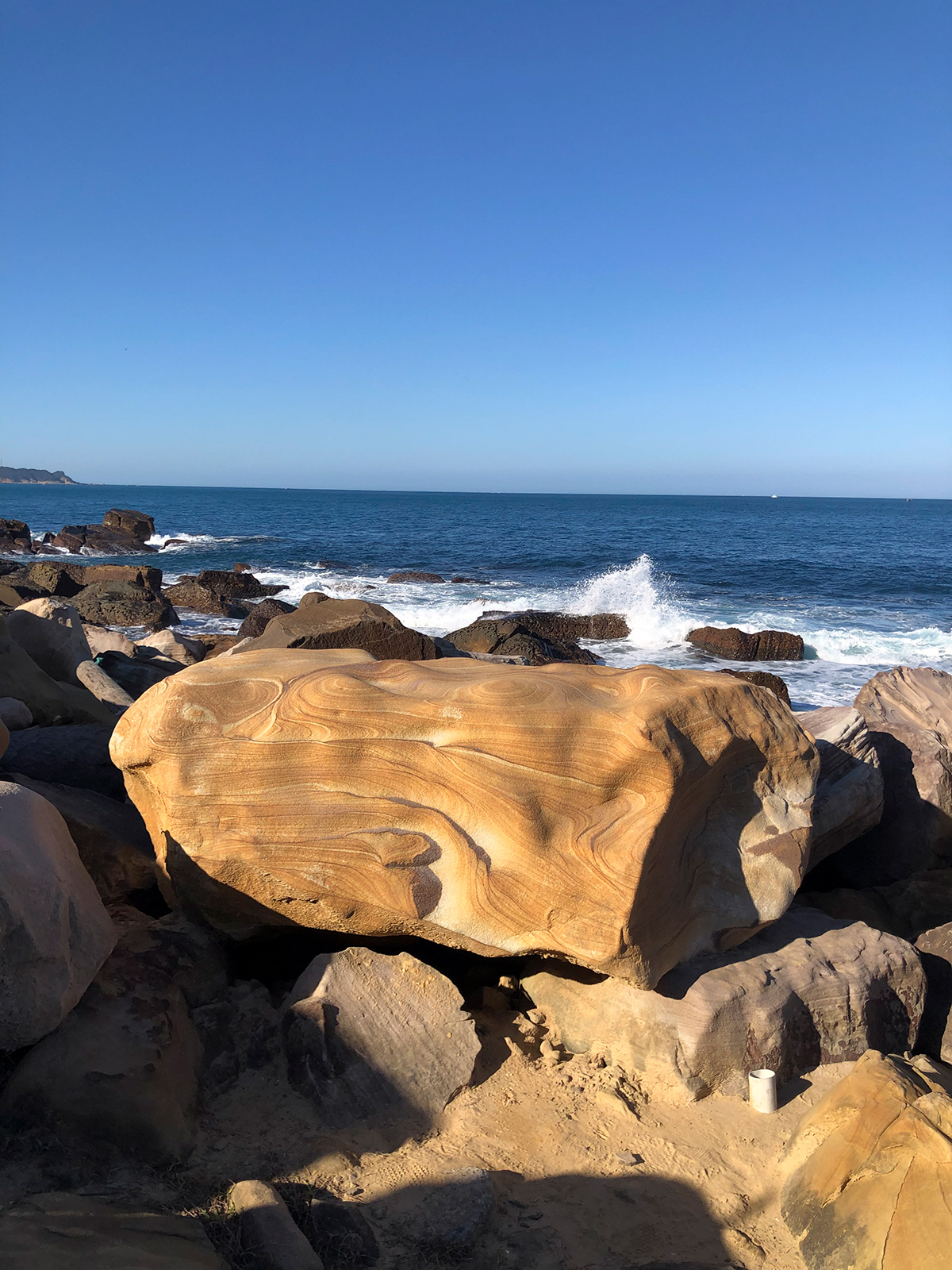
I have always loved documenting my life through photos and images, but I didn’t realize I was interested in rocks until grad school. I was working on a project about contrasting concepts: stillness versus movement. I asked myself a simple question: what is something that never moves? The immediate answer was a rock. But the more I thought about it, the less true that felt. Rocks are actually records of movement. They are formed over time through pressure, erosion, and accumulation. That shift in thinking stuck with me. When I went back through my photo archive, I realized I had been documenting rocks for years without noticing it. And luckily, I captured enough to tell the story.
Can you speak a bit more about your approach to rocks as “records of movement”—where does this idea stem from and why is this shift in perspective significant to you?
To recognize that any being has the ability to tell a story, either on its own or through careful observation, is to allow myself more ways of seeing the world. This shift in perspective is important to my work because it opens up more ways of seeing the world. It makes things feel less fixed and more in process, which I find really freeing. Many elements in nature may appear still at first glance, but they are never truly static. The scale of time, distance, and space in nature is very different from what I, as a human, am used to. The formation of a rock, for example, is a kind of continuous movement. A grain of sand can, over a long period of time and through pressure, become part of a rock. It’s a process we rarely witness, but it is always happening. Thinking this way allows me to approach my creating process with more openness and possibility.
What do you want people to think or feel as they flip through the pages of your book?
I hope they can feel a sense of slowness. Imagine they are on a journey or even imagine they are themselves a rock, moving, changing, and becoming.
Can you think of one piece of good advice someone gave you, and who said it?
One of my studio instructors in grad school, Michael Wang, always asked us to summarize our project in five sentences before we began the desk-crit. It sounds simple, but it’s surprisingly difficult and very effective. Whenever I feel stuck, I go back to that exercise. It helps me find clarity and direction without overthinking. Most of the time, I already have everything I need to move forward. I just need to articulate it.
What is one thing you want to accomplish this next year?
I want to spend more time exploring what genuinely interests me, while figuring out how to balance that with my day job as a landscape and architectural designer.
What is one thing you hope to accomplish in your lifetime?
I hope I can stay curious and have a deeper sense of empathy toward all kinds of beings.

A Letter From the Founder: Introducing Booooooom Studio
Making the work we’ve already been doing more official and, ideally, get a lot more of you involved.
Learn More
Tomorrow’s Talent 5 Book
This collection brings together work from 60+ artists and is also our biggest volume yet: 276 pages, and for the first time, in a larger format.
Booooooom Shop
Join our Secret Email Club
Our weekly newsletter filled with interesting links, open call announcements, and a whole lot of stuff that we don’t post on Booooooom! You might like it!
Sign UpRelated Articles